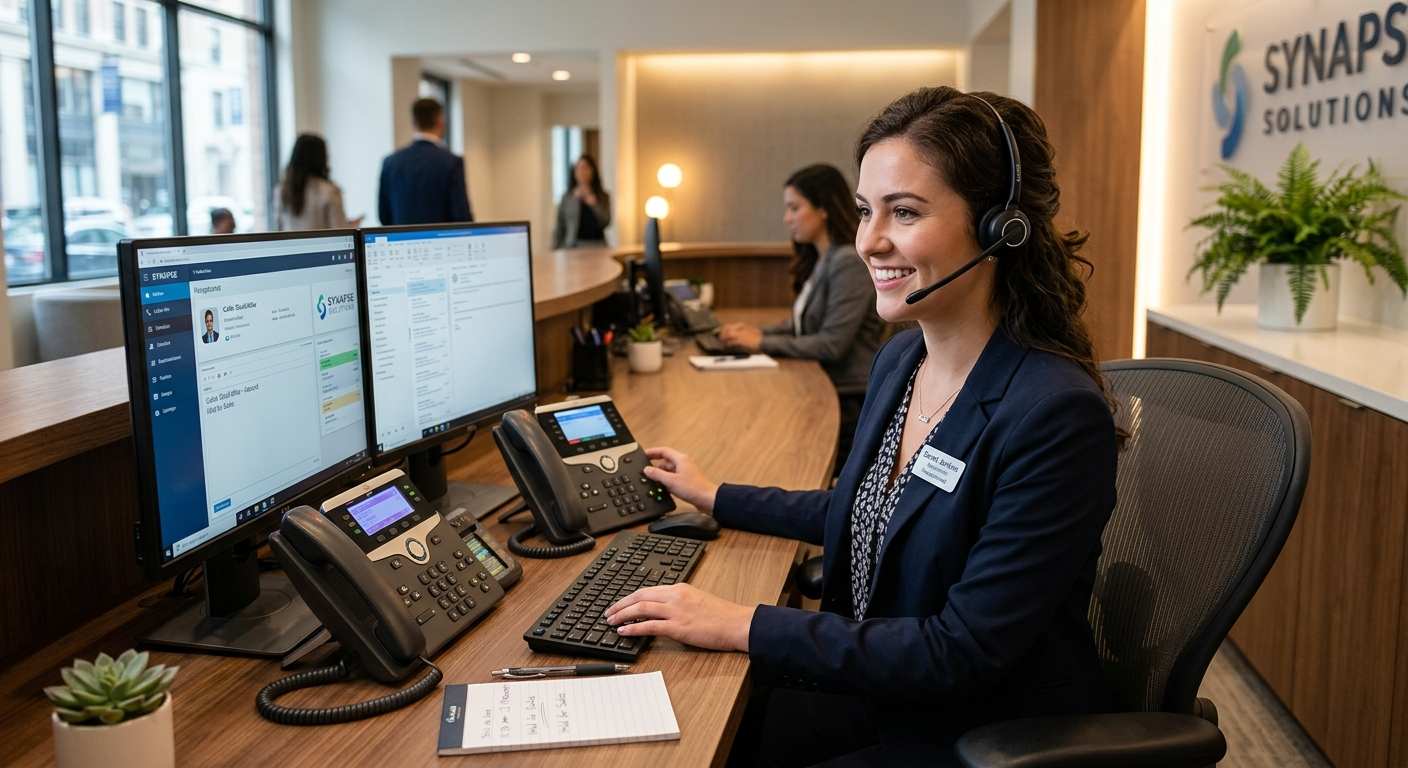
A receptionist is the first person a client meets. They’re the face and voice that greets people walking through the door or calling the office. So what is a receptionist, really? They’re the bridge between a business and the people trying to reach it, the ones making sure every caller and every visitor feels heard from the first hello. Most people assume the job is just answering phones. In practice, it’s one of the roles holding the whole operation together.
This is a look at what the job actually involves day to day, why it matters more to a business’s growth than most owners realize, and how new technology is reshaping what the front desk can do without replacing the people who make it work.
A Day in the Life: Core Receptionist Duties
Ask anyone who’s worked the front desk, and they’ll tell you no two days look the same. Receptionist duties require constantly switching gears, from warmly greeting a visitor to sorting out a scheduling conflict that just landed on three different calendars at once. The job needs a strange but specific combination: a genuinely welcoming personality paired with an exacting eye for detail. Whoever sits at that desk is the first impression of the entire company, and that first impression shapes how the rest of the visit or call goes.
Beyond the greetings, front desk receptionist duties involve a lot of work that largely goes unseen by anyone outside the office. This is the administrative backbone holding the place together:
- Handling new client paperwork
- Confirming appointments before they’re missed
- Keeping filing systems actually organized instead of just looking organized
They’re also the gatekeeper, making sure urgent messages reach the right person quickly, without getting lost in the shuffle of a busy morning.
Take that person away for a day, and most offices feel it almost immediately: messages pile up, calls go unanswered, the rhythm of the place gets thrown off. The receptionist is the anchor that keeps daily chaos from actually becoming chaos, freeing everyone else to focus on the work they were actually hired to do.
The Skills That Make a Receptionist Effective
Watch a handful of genuinely good receptionists work for an afternoon, and you’ll notice it’s not really about any single skill; it’s about staying composed while juggling five things that all feel urgent at once. The phones won’t stop, someone’s waiting at the desk, and an email needs a reply before lunch.
Clear communication is the core tool. A good receptionist can calm a frustrated caller simply by listening, rather than rushing to get them off the line. Organization matters just as much; picking up a call mid-sentence without losing track of the email they were halfway through writing is a real skill, not a given.
People who work as a receptionist also see and hear things that require real discretion – private details, sensitive situations, internal conversations not meant to travel. Trustworthiness isn’t optional in this role. It’s part of the job description whether or not it’s written down.
None of this is really about checking boxes. It’s about handling the human side of a business with some grace, making sure every person who calls or walks in feels like they matter, not like they’re an interruption to someone’s day.
Why the Front Desk Drives Revenue, Not Just Admin
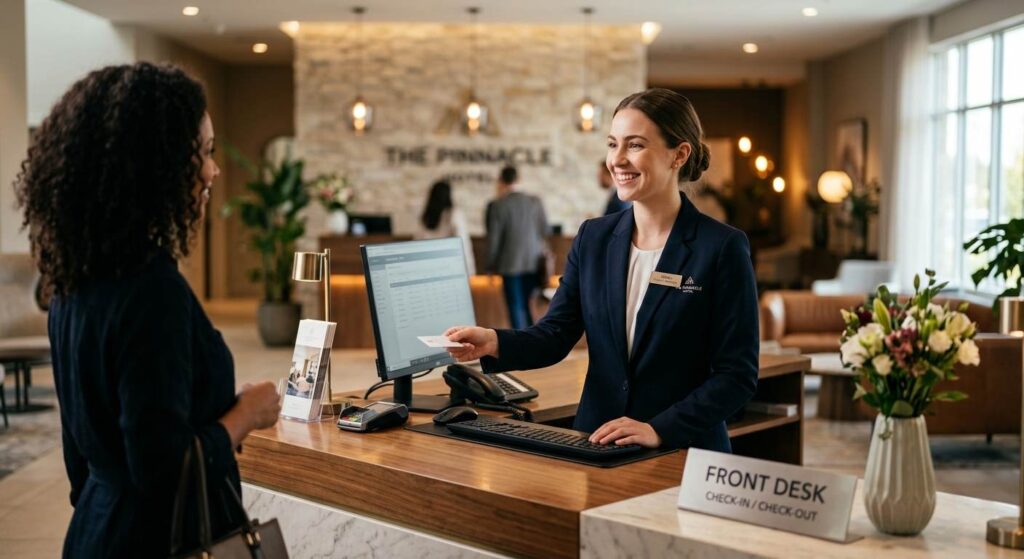
A lot of business owners file the front desk under “expense” rather than “revenue driver.” That’s a mistake. What does a receptionist do for the bottom line is more than most people give credit for. When a new customer calls, they’re making a split-second judgment about whether they can trust this business. If the call goes to voicemail, they hang up and call the next name on the list.
A good first interaction sets the tone for everything that follows. A fast, helpful front desk builds trust before anyone’s even discussed pricing or service details; they’re not just answering questions, they’re selling the quality of the business in real time, whether they realize it or not. Seen this way, every single call is a potential booking, and a well-run front desk ensures none of those opportunities are dropped on the floor. Investing in this part of the business is, in a very direct sense, investing in the reputation that keeps clients coming back.
When One Person Can’t Cover the Front Desk Alone
Even the most capable front desk staff hit a wall. During the morning rush, or right at lunch when the desk is briefly empty, call volume can outpace what one person can realistically manage, and that’s often exactly when the highest-value leads are trying to get through. A busy signal or an empty desk doesn’t usually get a second attempt. The caller moves on, and that opportunity is gone.
This is where modern tools step in – not as a replacement for the role, but as backup for the moments a single person physically can’t cover. Newo.ai’s AI receptionist is built to answer every call instantly, no matter the time of day or how many calls are coming in at once. It handles the repetitive but essential parts of the job – booking appointments, checking availability, answering common questions – even hours after the physical office has closed.
Bringing AI into the front desk doesn’t remove the human element. It actually protects it. The repetitive, high-volume work gets handled automatically, which frees up the human team to focus fully on the person standing right in front of them, the kind of attentive, personal service that’s hard to deliver when you’re also fielding three phone lines. This is how a small business can project the polished, always-available presence of a much larger company, without the overhead of a full support team. It’s a practical way to scale without losing the human connection that actually builds loyalty.
The Future of the Front Desk Role
The nature of front desk work is shifting. Routine tasks (checking a calendar, answering a frequently asked question, confirming an appointment time) are increasingly handled by software, and that’s a genuinely good thing. It frees the people at the desk to have real conversations instead of functioning like a human switchboard all day.
The businesses getting this right are pairing capable people with the right AI tools, not choosing one over the other. The system stays “on” around the clock, while the human staff brings the warmth and judgment that software still can’t replicate. If you’re thinking seriously about what does a receptionist do in a modern office, the honest answer is: less repetitive phone work and more of the relationship-building that actually keeps clients loyal.
See how Newo.ai works as a 24/7 AI receptionist for businesses that don’t want to lose a single lead to a missed call. Build a free demo at newo.ai in about three minutes – connect your website and hear exactly how it would handle a real call before deciding anything. The front desk isn’t a bottleneck anymore. Done right, it’s one of the best growth tools a business has.