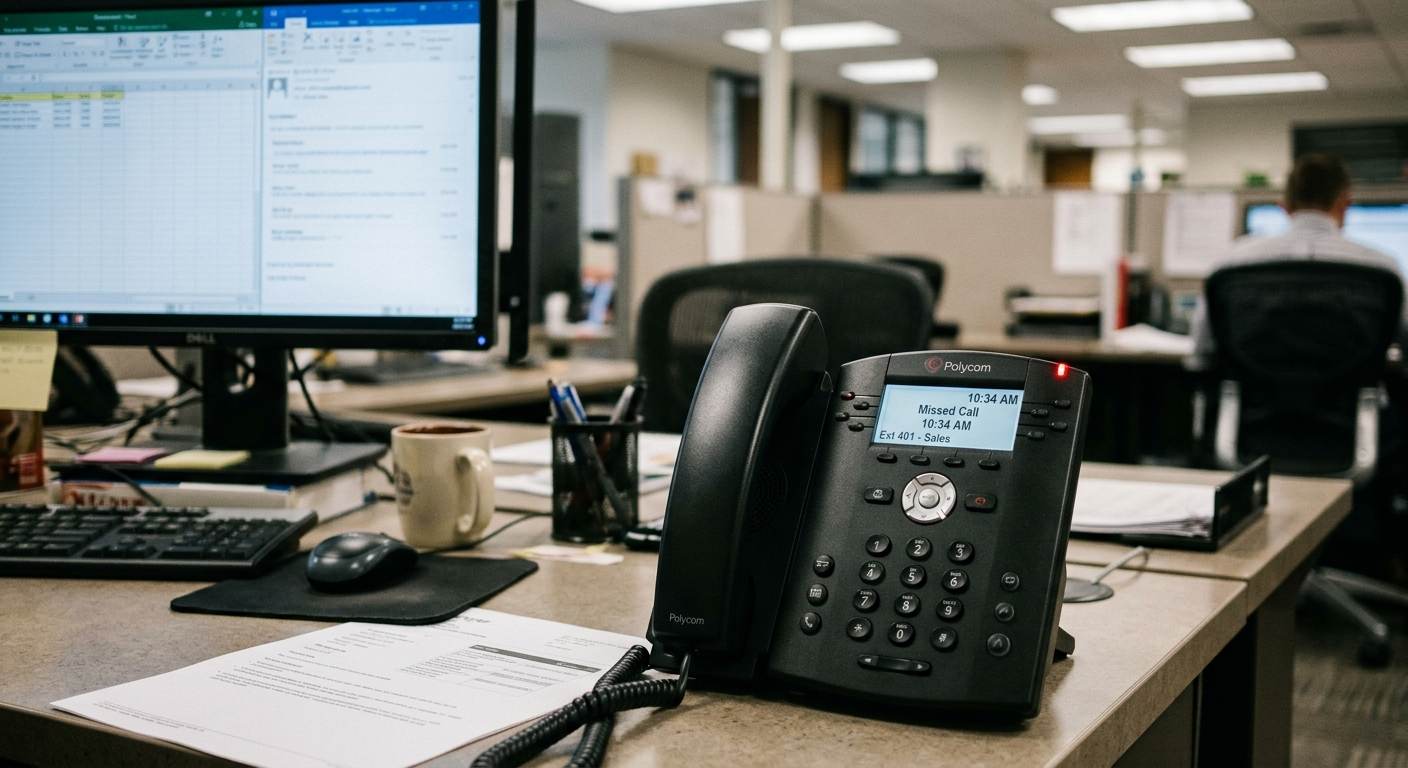
Every unanswered call is a customer deciding, in real time, to move on. Modern buyers don’t wait around. If they can’t reach someone or get an immediate answer, they hang up and call the next business on Google. There’s no loyalty in that moment, just whoever picks up first.
This guide puts a real number on what those missed calls are actually costing and lays out how to stop the bleeding before it quietly drains your growth. For most service businesses, the phone is still the primary channel for new leads, pricing questions, and urgent bookings. When nobody answers it, because you’re in the field, in a meeting, or simply closed for the weekend, that business momentum stops cold. The client who was ready to hire you doesn’t wait. They just move to whoever is available.
The fix isn’t working longer hours or watching your phone around the clock. It’s making sure the phone is always answered by a reliable system, regardless of the time or how slammed your team is.
The Numbers Behind Every Unanswered Ring
Missed calls and small business statistics make this hard to ignore. Research across service and retail industries shows that roughly 62% of calls to small businesses go unanswered during peak hours or after closing time. That’s more than half of your total market potential disappearing every week.
Most of those callers don’t try again. They won’t leave a voicemail, and they’re not going to wait two hours for a callback. They want help now, and they know someone else will pick up. The business that answers first gets the job, regardless of who has the better reviews or the lower price.
When you look at the data, it’s no longer a minor inconvenience. It’s a structural flaw in daily operations. If more than half of your potential customers can’t reach you on the first try, your marketing budget is effectively generating leads for your competitors to close.
What a Missed Call Really Costs You
The cost of missed phone calls that small business owners face adds up fast across three categories: lost sales, wasted advertising spend, and a slower accumulation of positive reviews.
When you pay for Google Ads, local SEO, or any lead generation to get your phone ringing, an unanswered call means you absorbed 100% of the acquisition cost and collected 0% of the revenue.
A single missed lead can be worth hundreds or even thousands of dollars in lifetime value, especially in industries like home services, legal, or healthcare. Multiply that across every busy day of the year (even just three missed calls per day), and the financial drain becomes significant over a month, let alone a quarter. The phone stops looking like an overhead line item and starts looking like one of the most important revenue channels in the business.
Protecting that line isn’t a back-office concern. It directly affects cash flow and the ability to scale without constantly increasing ad spend to compensate for leads that aren’t converting.
Why Outsourcing the Phone Often Falls Short
When business owners start thinking about how to reduce the missed calls small businesses face, the usual first instinct is to hire someone – an extra receptionist, or a traditional outsourced call center. Both options carry real limitations.
In-house staff adds fixed costs, training time, and scheduling complexity. You’re paying a full salary to sit by a phone that might be quiet for stretches and then be overwhelmed in others. That’s not a scalable model for a lean operation.
External answering services are a step up from voicemail, but they create their own friction. Agents handling dozens of companies at once rarely know your pricing, availability, or tone. Most of the time, they take a name and a callback number, which still leaves the customer waiting for an actual answer. You’ve paid to answer the call and still haven’t solved their problem.
If the person picking up can’t book the job or answer a basic question about your services, many callers will still go elsewhere. The root issue- speed and resolution- hasn’t been addressed.

Strategies That Actually Stop Missed Calls
The most effective reduce missed calls business strategies focus on answering every inquiry instantly, not following up faster. The distinction matters because by the time a callback happens, a large portion of those leads have already made a decision.
Modern automation handles this without adding headcount. Newo.ai’s AI receptionist answers every call in under two seconds, handles the intake conversation naturally, and books appointments directly into your calendar – 24/7, including evenings and weekends. Your clients never hit voicemail. Your team doesn’t have to monitor the phone after hours. And every caller gets a real, helpful response exactly when their intent to book is highest.
The system operates in your brand voice and routes anything complex – an unusual situation, a question requiring human judgment – to a live team member with the context already documented. What reaches your staff are qualified, relevant conversations, not cold transfers with no background.
For home services, medical practices, legal offices, and any business where urgent calls drive a significant portion of revenue, this kind of missed call prevention isn’t a luxury; it’s infrastructure.
Track the Calls You’re Still Losing
You can’t fix what you’re not measuring. The first step is logging every inbound call (answered or not), so you can see exactly when your volume peaks and where the gaps are.
Most businesses are surprised by what their own data actually shows. There’s usually a wave of calls right after working hours between 5 and 8 PM, another cluster on weekends, and a quieter-but-consistent overnight trickle that adds up significantly over a month. Without visibility into this, it’s easy to assume the problem is smaller than it is and to keep underinvesting in the fix.
Newo.ai’s analytics dashboard shows call volume, response rates, booking conversion, and revenue recovered, updated in real time. When you can see the number of leads captured versus missed week over week, the ROI becomes straightforward to calculate. Watching the missed call rate drop as automation handles more of the volume turns a frustrating blind spot into a metric you can actually manage.
Tracking also reveals patterns you’d never notice otherwise: which services drive the most after-hours inquiries, which days have the highest abandonment rate, which callers converted versus which ones went quiet. That kind of data makes every other part of your marketing smarter.
Consistent measurement turns a hidden revenue leak into a clean operational metric – one you can shrink systematically instead of guessing at.
If you want to see what this looks like for your specific business, try a free Newo.ai demo: 3 minutes, no credit card required. You’ll hear your AI receptionist handle a real call before committing to anything.
The calls are already coming in. The only question is whether you’re the one answering them.