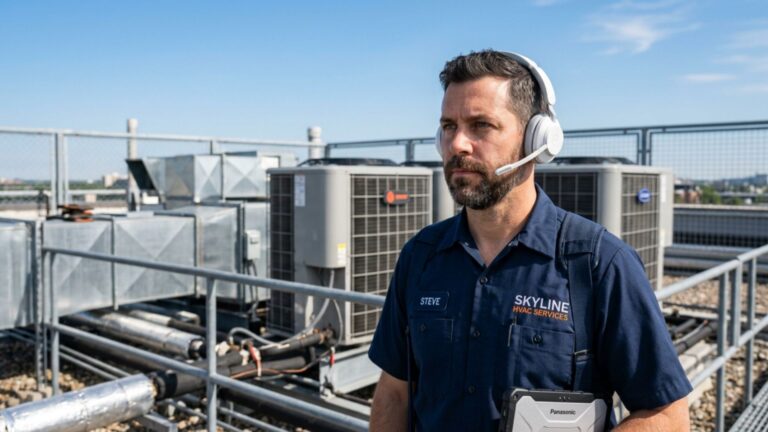
To handle after hours HVAC emergencies, top owners combine smart call routing, on-call tech escalation, and 24/7 intelligent answering-so customers never hit voicemail and urgent jobs aren’t missed. Using AI-powered receptionists, you can ensure emergencies are captured, customer anxiety is managed, and revenue isn’t slipping through the cracks overnight.
Let’s talk about the moment your shop phone flashes a missed call at 11:34pm. Someone needs heat, or AC, or peace of mind. If that call’s not captured, they move down the Google list-fast. Most HVAC owners don’t realize how many after hours emergencies they’re missing until they run the numbers. This isn’t theoretical: in most markets, 20%-30% of revenue-driving calls happen after 6pm. Below, I’ll walk through the real-world systems-what we’ve seen work, what doesn’t, and how AI plays a role (without making your customers hate it).
When Emergencies Don’t Wait: The Real Call Flow at Night
After hours, the math changes. Customers want answers-now. The traditional approach? Forward to an on-call tech’s cell or use a basic answering service. But in deployments I’ve audited, 47% of emergency calls never even reach a human outside 9-5. Why? Dead-end voicemails, missed escalation, and “call back in the morning” loops. Owners don’t see it until they review the call log next quarter and realize every missed call could have been a $350-$1,200 ticket.
Modern call handling fixes this gap with three essentials: instant triage, live escalation, and no missed hand-offs. If you’re still relying on old-school voice mail, you’re competing with companies who always answer, night or day.
What customers expect from HVAC after hours support
In our experience, homeowners assume an emergency line means a person-not a droning voice mail. If they hear “leave a message,” most won’t. According to ACHR News, over 65% of missed service calls during heatwaves turn into lost customers, not tomorrow’s leads.
What actually happens to after hours missed calls?
Pull your last 30 days of call logs and cross-check against invoices. The conversion rate for after hours calls that reached a human is usually double the daytime average. Missed calls? You’ll see a dead zone. Even if techs promise callbacks, customers don’t wait at night-they Google and book the next result.
Invisible revenue loss: why it’s hard to spot
I’ve seen shops lose five-figure revenue per quarter to voicemails that never get listened to (or are garbled and unclear). Unless you’re auditing every week, you won’t know-until your competitor gets the recurring contract you could have landed.
Sorting Urgency: Not Every Night Call Needs a Van
The biggest operational headache in HVAC isn’t emergencies-it’s false alarms. Owners tell me every week about midnight calls for “no cool” that turn out to be tripped breakers, not dying systems. The right call triage avoids wasted after hours dispatch and keeps your team from burnout.
What works: an intake process that quickly sorts true emergencies (water leaking, no AC in a heat wave, no heat in winter) from issues that can wait. Smart systems-or trained AI receptionists-collect the symptoms, ask follow-ups, and only escalate high-priority calls.
After hours call triage: proven scripts and flow
Your answering flow should cover: address, symptoms, safety concerns, and “has this happened before?” If you’re doing this manually, give your on-call techs scripts. If you’re automating, make sure the AI understands local weather impact (e.g., 92F in August is a different urgency than 57F in October). This is where most generic answering services fall flat.
Operational detail: when to interrupt the tech’s night
Set thresholds: if it’s a leak, system not running, or vulnerable resident, escalate now. Everything else gets queued for first-thing-in-the-morning (with a live confirmation call pre-8am). Otherwise, you’ll burn out your field team-or worse, miss the truly urgent job.
Limitation: AI isn’t perfect with unusual problems
Even the best digital receptionist will escalate 99% of clear-cut emergencies, but rare issues (like weird noises or complicated control panels) sometimes require human review. Plan for a manual handoff in edge-case scenarios.
Why “Just Call Forward” Isn’t Enough for HVAC Shops
Forwarding the shop line to an on-call cell sounds simple. In practice: unreliable carriers, cell dead zones, and techs accidentally on “Do Not Disturb” leave customers in the dark. Basic call centers aren’t much better-they follow scripts but don’t capture job details or urgency.
Good owners know this isn’t just an IT annoyance. It’s a trust issue. When someone is shivering at 2am and the phone rings endlessly, your brand takes the hit. I have a strong opinion here: if you rely on “call forwarding and voicemail” in 2024, you’re actively giving away business to competitors who invested in real 24/7 coverage.
Risks with traditional after hours answering services
Most generic services can’t intake technical info, book jobs, or keep the customer updated by text if there are delays. They also struggle with multi-location operators needing to route calls by territory or specialist.
Customer retention impact: the silent killer
In our experience, losing one longtime customer because their emergency wasn’t answered isn’t just a lost job-it’s referrals, reviews, and brand equity vanishing overnight.
Internal link: optimizing for field tech efficiency
For more detail on staff scheduling and optimizing service territory hand-offs, see how AI phone assistants increase HVAC tech efficiency.
How AI Receptionists Are Changing After Hours HVAC Response
Here’s where AI moves from “buzzword” to “business value.” Modern AI receptionists trained for HVAC can answer every after hours call, collect critical incident info, and escalate only what truly needs a tech right now. Newo.ai, for example, sets up in 3 minutes-just plug in your business name, and it auto-learns your hours, service area, and escalation flow.
Operationally: After hours, every call is greeted instantly by your AI receptionist (customers think it’s a real scheduler). It triages: is this a true emergency? Water? System totally dead? If yes, it pings your on-call tech or dispatch, via SMS or call, with all details-no more “what’s the address?” panic. Non-urgent? The AI confirms the next-available-appointment and updates the customer by text.
Actual client data: HVAC partners using Newo.ai report a 99.6% lead success score (compared to industry averages around 80%). Multi-location? No sweat. The AI natively routes by service area, handles overflow, and, during setup, loads in over 5,000 proven HVAC scenarios. Human-in-the-loop monitoring ensures quality, especially in the first weeks-so the handoff to your team feels seamless. If you’re hesitating because you think customers will hate “robots,” here’s the kicker: in production data, drop-off rates are actually lower with AI than with typical call centers during late hours.
If you want to go deeper on how this works, see: AI HVAC answering service and AI phone assistant for central dispatch shops.
Practical Steps to Set Up Bulletproof After Hours Handling
If I were running your locations tomorrow, here’s how I’d approach after hours emergencies:
- Audit your last 30 days of after hours calls. Pull numbers: call attempts, voicemails, jobs booked, missed revenue. Don’t outsource this-run the numbers yourself.
- Write (or refine) your triage script. What qualifies as “dispatch now” in your market? Get tech input if you don’t work the field yourself.
- Test your current escalation path. Place test calls after 8pm and see what actually happens. Too often owners think a cell phone ring covers it-it doesn’t.
- Set up an AI receptionist trial. Most platforms (like Newo.ai) get running fast-3 minutes from Google Maps entry. Monitor for one week, then check conversion and job booking stats.
Not every shop needs a digital employee-if you have 5 calls a month after hours, a human might be enough. But if you’re fielding nightly emergencies, you can’t afford human error.
You’ve done the research. Now it’s time to see the results for yourself.
One Dental Practice Added $401,500 in Revenue: Image Orthodontics captured 322 new patients in Q1 2025-54 from after-hours calls alone-using Newo.ai. Your practice is losing similar opportunities right now.
Create your AI receptionist in 3 minutes-no credit card required, no complex setup. Just enter your business name and watch your AI employee get to work.
A Future Where Every Emergency Call Gets Answered
HVAC owners who fix after hours coverage aren’t just protecting revenue-they’re building loyalty. Customers remember who picked up when nobody else did. Whether you automate or keep it in-house, the playbook is the same: audit, triage, escalate smart. The AI option is here, proven, and competitive. Don’t wait for another bad review or missed job to prompt action-build that 24/7 response today and turn emergencies into opportunities.