
A dental answering service can give evening and weekend callers a useful next step when your practice is closed. For orthodontic teams, that means separating new-patient inquiries, existing-patient requests, and concerns that need clinical attention.
Evenings may be the first time a parent or working adult can contact the practice. A callback adds another coordination step. Offer a clear next action during the call, and explain when staff will respond if it cannot be completed.
What the after-hours calls contain
A parent researching braces may want to book a consultation. An existing patient may need to change an appointment or ask about an appliance. Those requests need different routes, even when they arrive at the same time.
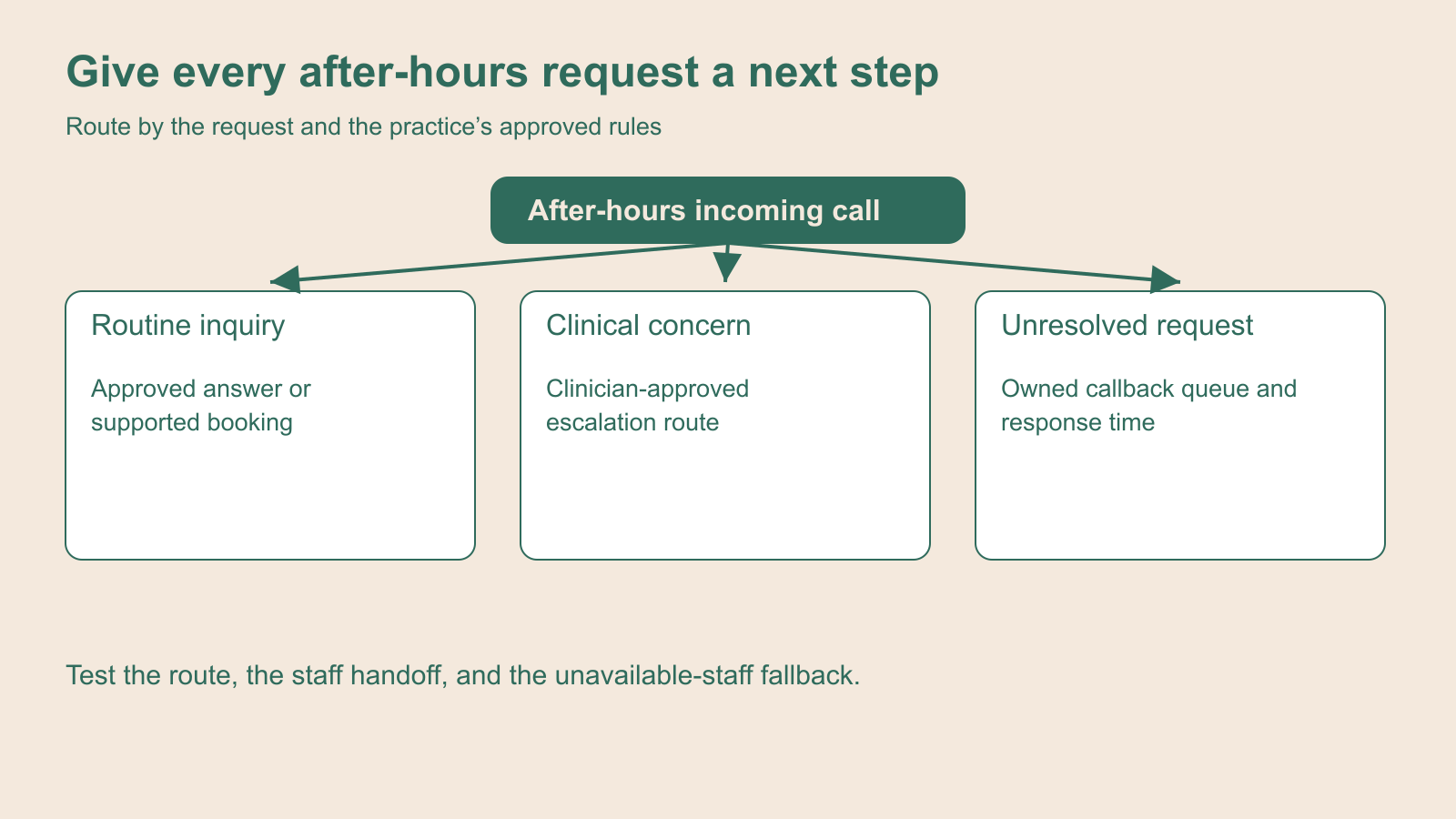
Some after-hours calls can wait for an administrative callback. Others need a response under the practice’s clinician-approved escalation policy. The call workflow should distinguish routine appointment requests from concerns that require clinical attention. It should also give callers a useful next step when the person they need is unavailable.
The Image Orthodontics example
Newo reports that Image Orthodontics handled 1,563 after-hours inquiries in Q1 2025. Its dental case material also reports 54 new patients from after-hours calls. These figures describe one deployment; they do not establish that every inquiry was a new-patient lead or that every resulting patient would otherwise have been lost.
See the Image Orthodontics case study for the reported period and deployment results. Newo’s dental case material reports the after-hours patient outcome separately.
The practical lesson is to record what happens after an inquiry. Answering creates an opportunity to help, but the call itself does not establish an appointment, an attended consultation, or treatment revenue.
What your dental answering service should handle
An AI receptionist can extend administrative coverage beyond office hours. Its useful scope depends on current practice information, supported integrations, and access to staff when a request falls outside those rules.
Configure the service to explain approved practice information, collect the caller’s request, and book supported appointments when the scheduling integration and practice rules allow it. Insurance questions may require collecting details for staff review; that should not become an unsupported confirmation of coverage.
Item |
What to record or do |
Check or owner |
|---|---|---|
New-patient inquiry |
Provide approved service information; book only supported appointment types. |
Practice manager: test a valid slot and an unavailable slot. |
Existing-patient request |
Collect the request or perform an authorized scheduling action. |
Front-desk lead: confirm identity and access rules. |
Clinical concern |
Follow the clinician-approved escalation policy. |
Clinical lead: test the designated route and unavailable-staff fallback. |
Unresolved request |
Record the request and promised response time. |
Opening-shift owner: reconcile the callback queue. |
Use AAO guidance on orthodontic emergencies as background when your clinical team defines escalation rules.
Measure the next step
For each reporting period, count unique after-hours callers separately from total calls. Identify new-patient inquiries, bookings, attended consultations, and treatment starts as distinct outcomes. Deduplicate repeat calls and allow the same follow-up period before comparing cohorts. Compare like periods and record marketing or opening-hour changes.
Record which requests were completed during the call and which required a callback. The opening-shift owner should be able to see who needs a response and what the caller was told. That makes the handoff useful to the team as well as the patient.
Compare outcomes for the service you actually configured. A practice that permits only new-patient consultation booking should not judge performance as though every appointment type could be changed overnight.
Choose a dental answering service around the tasks your practice can support after hours. Test booking rules, assign responsibility for callbacks, and track what happens after the call so coverage leads to a useful next step.