Phone Ordering and Online Orders Where Voice AI Fits

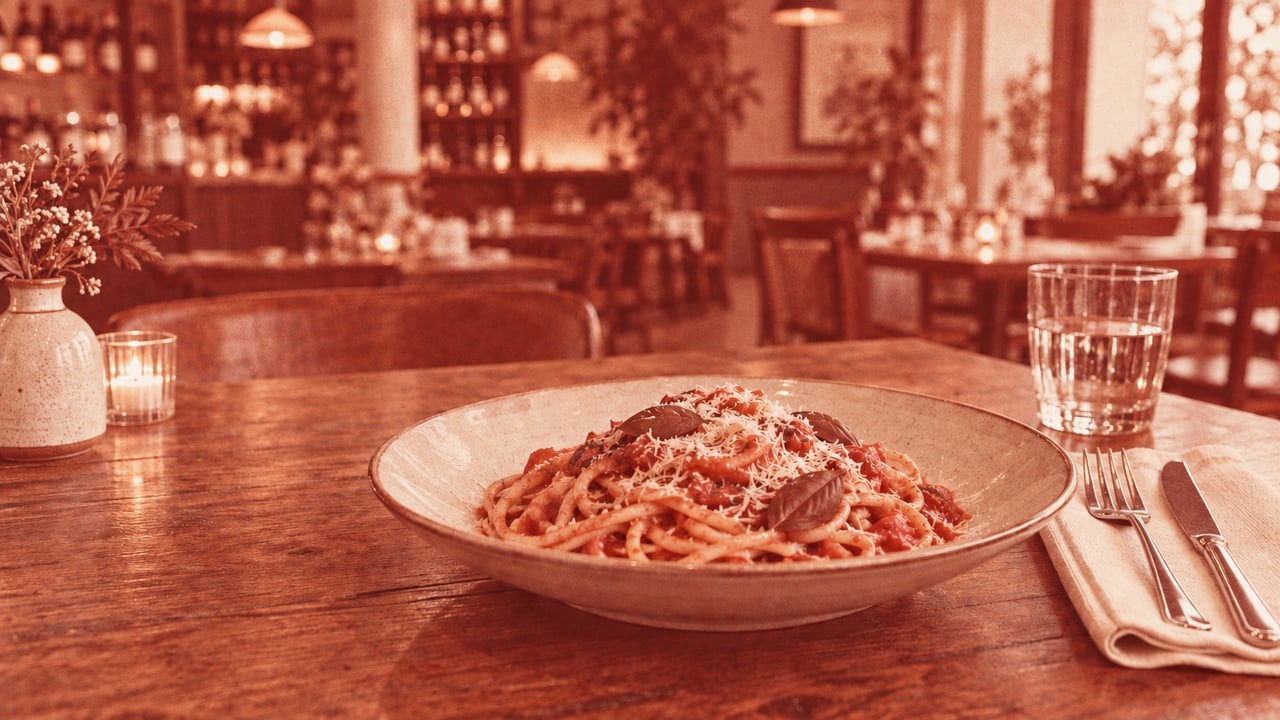
Online ordering gives guests a way to browse a menu and place an order without speaking to staff. Phone ordering serves guests who prefer to call or need help before they can order. Restaurants need a clear plan for both.
That plan should say who handles each request, where the order or reservation is recorded, and what happens when the first route cannot help. A ringing phone is part of the restaurant's service operation, even when most ordering technology is designed around a screen.
How phone ordering fits alongside online orders
Online ordering lets guests browse and buy without waiting for a conversation. They can review the menu, customize an order, see prices, select a pickup time and pay through a supported ordering interface. Some guests already know what they want and would rather say it than navigate a menu.
Others have questions that an ordering form cannot answer. A regular may prefer the familiar routine of calling, while someone ordering for a group may need to explain a request. Those guests need a reliable way to reach the restaurant and get help.
Papa Johns offers phone ordering alongside its web and app options, a concrete example of channels coexisting.
The National Restaurant Association’s 2025 off-premises research also identifies service speed and easy ordering and payment technology among the basics that encourage repeat business.
Some guests prefer to call, so phone service needs a defined place in the ordering process. Make the channels your guests use reliable, and give them a clear route to help.
Define what each call should complete
The problem is that restaurants often do not answer. Industry estimates suggest restaurants lose roughly $20 billion every year from calls that never get picked up. A typical restaurant location may miss around 150 calls per month.
If those missed calls represent potential transactions worth roughly $35 to $85 each, that translates to approximately $5,250 to $12,750 in potential monthly revenue.
Not every missed call becomes a sale. Some callers are asking questions. Some are calling about an existing order. Some may be wrong numbers. But among those calls are customers who are actively trying to spend money with the restaurant.
And if nobody answers, they have an easy alternative. Call somewhere else. This is why a restaurant phone ordering strategy matters. The phone is not simply a customer service expense. It can be part of the revenue funnel.
Restaurants may invest in a point-of-sale (POS) system, online ordering, delivery integrations and marketing. Phone coverage belongs in the same operational plan.
A restaurant can spend thousands of dollars building a sophisticated digital customer journey. Then a customer sees the restaurant online, decides to call, and nobody answers. The funnel breaks at the final step.
It is like building a beautiful front entrance and then locking the door whenever the restaurant gets busy. Improving digital ordering does not solve the problem if customers cannot complete their journey when they choose to call.
For each recurring call type, agree on the first response, the destination record, and the point at which staff take over. The table below is a planning template. It describes the workflow the restaurant needs, whether people, software, or both carry it out.
|
Guest request |
First route |
What counts as complete |
Staff handoff / fallback |
|---|---|---|---|
|
A new pickup order |
Take the order through the approved phone workflow, or offer online ordering if the guest wants it. |
The restaurant has accepted the order in its working order system; items, total, pickup time and payment status are confirmed. A sent link alone is not an order. |
Unsupported modifier, unavailable item, unclear timing, or failed submission goes to the designated order taker. |
|
A change to an existing order |
Find the original order and check its preparation status. |
The change is accepted against that order and communicated to the kitchen. |
Staff decides whether the change is still possible; avoid creating a duplicate order. |
|
A reservation |
Check the current booking system and restaurant rules. |
The reservation is recorded and its details confirmed to the guest. |
Large parties, exceptions, or an unavailable booking system go to the host or manager. |
|
Hours, directions or menu information |
Use the restaurant's approved, current information. |
The guest receives an answer consistent with the website and location. |
Unclear ingredient or allergy questions go to trained staff; the workflow should not guess. |
|
A complaint or request outside the usual process |
Route to the manager or responsible team member. |
Someone accepts responsibility, or a follow-up request has a named owner and a stated response time. |
If the transfer fails, explain the next step and collect contact details with the guest's agreement. |
Name the person responsible for keeping menus, hours and routing rules current. Also name the staff member who owns follow-up during each shift. A transfer attempt or a captured message should remain unresolved until the receiving person accepts it.
Where AI can support phone coverage
Restaurants can cover calls with their own team, an answering service, automation powered by artificial intelligence (AI), or a combination. The appropriate mix depends on when calls arrive and what callers need. When demand overlaps with busy service, compare the full cost of coverage with completed requests, staff follow-up and errors. Automation still needs configuration, oversight and a dependable route to staff.
Newo can support restaurant phone coverage by answering routine questions and handling supported reservation workflows. Its Tableo integration, when configured and enabled, can check availability, create a reservation, and modify or cancel an existing booking. The setup is specific to a restaurant and should be tested against the live booking system before use.
Food-order capture, submission to a point-of-sale system and payment are separate capabilities to verify for the restaurant's exact setup. Staff still own exceptions, service recovery and situations the system cannot complete. Agree on what happens when a transfer fails as well as when it succeeds.
Check the connection between channels
Before changing phone coverage, test a normal order, a sold-out item, a change to an existing order, a reservation request and a failed staff transfer. Follow each request to the record staff actually use. Check that the caller hears the same relevant menu information, availability and timing as a guest ordering online, allowing for any clearly stated channel-specific rules.
Record the test request, expected outcome, actual system record, failure owner and correction. Do not expand an automated workflow that cannot reliably confirm the outcome it promises. Keep a working staff route while correcting it.
After the test, compare equivalent busy shifts before and after any change. Use these suggested measures; they are not industry benchmarks.
|
Measure |
Definition and source |
Decision it supports |
|---|---|---|
|
Completed order requests |
Accepted orders divided by unique order-intent requests; reconcile call records with order records. Mark unknown intent/outcomes separately. |
Does the route complete orders, rather than just answer calls? |
|
Successful staff handoffs |
Handoffs accepted by staff divided by attempted handoffs; check call/transfer records and staff confirmation. |
Does the fallback route reach someone? |
|
Corrections and duplicates |
Count erroneous or duplicate records associated with phone requests over the same period; review order/reservation records. |
Does the workflow need correction before expansion? |
|
Unfinished follow-up |
Requests still awaiting the named owner's action beyond the promised time; check the shift follow-up log. |
Is after-call work being completed? |
If a caller switches to online ordering, count the eventual order once where you can match it. Treat unmatched outcomes as unknown. More answered calls alone do not establish incremental revenue or a reduction in staffing costs.
The restaurants that win in 2026 will not necessarily be the ones that force customers into the newest ordering technology. They will be the ones that make it easy for customers to do business in the way that suits them.
Online ordering should keep growing. Delivery apps will remain important. QR codes will continue to have their place. But the phone is still here. And when a customer chooses to call, that call represents intent. Ignoring it does not make the channel disappear.
It simply sends that customer somewhere else. A modern POS and a great website do not matter much if the phone—the channel many high-intent guests still use—goes unanswered.
Start with one recurring call type and check that it reaches a confirmed outcome during a busy shift. Use the same exercise to decide where staff coverage, clearer online information, or automation would help. To assess Newo's role in your phone ordering strategy, review Newo’s restaurant workflows against your actual booking and order-handling requirements.