Tesla’s Bold Recognition of China’s Rise
On January 31, 2026, during a Tesla earnings call, CEO Elon Musk issued a candid assessment of the evolving humanoid robot sector — and drew attention by naming China as Tesla’s biggest competitor in this emerging field. Musk emphasized that China’s strength in artificial intelligence and large-scale manufacturing positions its robotics firms as formidable rivals to Tesla’s Optimus program, even as Tesla insists its own humanoid robots currently lead in areas like AI capabilities, hand design, and electromechanical dexterity.
This moment is significant because it marks a shift in how major U.S. tech leadership views global competition in robotics. Rather than underestimating international rivals, Musk acknowledged that Chinese companies are not only innovating but scaling quickly, with several firms pushing toward public listings and expanding their product lines.
China’s Rapid Robot Revolution
Behind Musk’s statement lies an explosion of activity within China’s robot ecosystem. Local firms like Unitree Robotics, AgiBot, LEJU, and Deep Robotics are advancing humanoid robot development, pursuing initial public offerings (IPOs) and attracting capital to accelerate growth. China’s focus on mass-producing Voice AI Agents and embodied AI systems reflects a strategy that moves from pure research to real-world applications — from education and logistics to manufacturing and service sectors.
Analysts see 2025 as a turning point: broader commercialization, more diversified non-human workers in factories, and the entry of robots into everyday business functions. Capital markets are responding, funding companies that blend large-language models with physical robotics — a technological fusion pushing the industry toward scaled delivery.
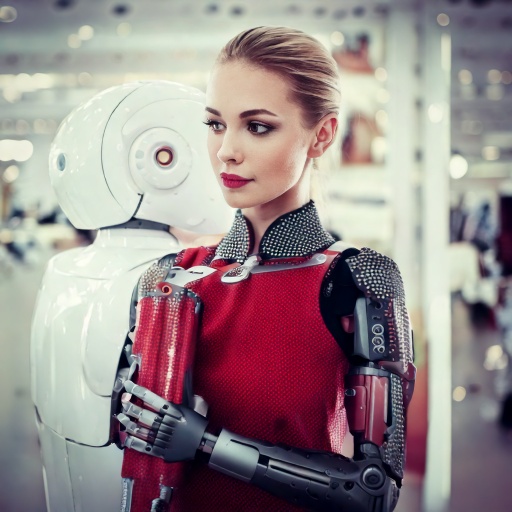
Tesla’s Counter-Strike: Investment and Autonomy
Tesla is not taking this competition lightly. Musk outlined that Tesla will more than double its 2026 capital expenditures compared to 2025, allocating more than $20 billion to factory builds, Optimus robot development, and supporting R&D efforts. He also stressed the company’s ambition to produce its own in-house chips to reduce reliance on external suppliers — a key strategic move to support long-term AI and robotics goals.
Despite Musk’s confidence in Optimus’ technical edge, the broader significance of his remarks lies in acknowledging that the race for humanoid robots — essentially AI employees and non-human workers — is now a global competition, not a unilateral U.S. domain. This competitive reality could accelerate innovation, drive down costs, and increasingly integrate advanced robots into industrial and consumer roles worldwide, reshaping labor markets and technological leadership.
Key Highlights:
- Elon Musk said on a Jan. 31, 2026 earnings call that China is Tesla’s biggest competitor in humanoid robots.
- China’s firms are rapidly advancing AI-enabled robots, pushing toward IPOs and scaled commercialization.
- Tesla plans $20 billion+ capital investment in 2026, including chip autonomy and mass production for Optimus.
- The robot race reflects a broader global shift toward AI Employees and Non-Human Workers shaping future industries.
Reference: