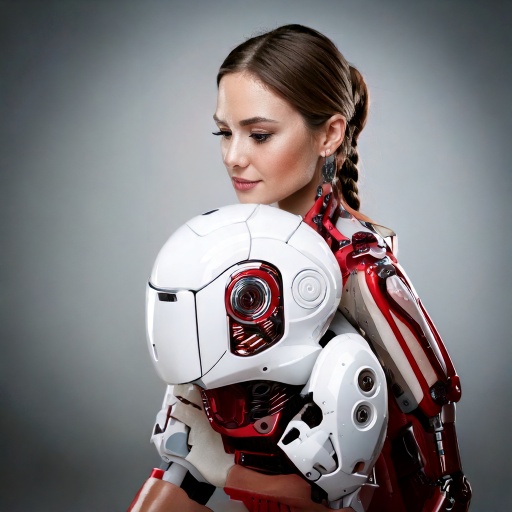
China Accelerates in the Robot Space Race
In a groundbreaking development this week, China has made significant strides in humanoid robotics for space applications. The Beijing Innovation Center of Humanoid Robotics (X-Humanoid) successfully connected its “Embodied Tien Kung” robot to a low-Earth orbit satellite, transmitting visual data in real time to a smartphone and computer simultaneously—a global first. Meanwhile, Shenzhen-based Engine AI announced plans to send its PM01 humanoid robot into space, potentially creating the world’s first non-human astronaut.
This push highlights China’s strategic approach, borrowing tactics from its electric vehicle sector: heavy investment, rapid iteration, and vertical integration. The country aims to establish dominance in a market that combines robotics and aerospace technologies.
Why Humanoid Robots are Ideal for Space
Space presents extreme challenges: microgravity, radiation, temperature fluctuations, and vacuum conditions. Unlike humans, humanoid robots like PM01 can endure these harsh environments without risk. Engine AI’s PM01 features high-precision sensors, millisecond-level motion response, and autonomous AI algorithms, making it capable of operating in space while maintaining real-time communication via satellite internet. Such technology also benefits terrestrial applications in remote or disaster-stricken areas, where traditional networks may be unavailable.

The Growing Market for Non-Human Workers
Humanoid robots are increasingly significant in both commercial and industrial sectors. According to Counterpoint Research, 16,000 humanoid robots were sold globally in 2025, predominantly in China. By 2027, sales are projected to exceed 100,000 units, with logistics, manufacturing, and automotive sectors accounting for over 70% of deployments. This rapid adoption underscores the growing role of AI employees and non-human workers in modern economies.
China’s success in the robot space race mirrors the historical U.S. space race, combining economic opportunity with technological advancement. With year-on-year market growth reaching 508% in 2025, the country is well-positioned to lead the next generation of robotic exploration and AI-enabled operations.
Key Highlights:
- China’s “Embodied Tien Kung” humanoid robot connected to a low-Earth orbit satellite, a world-first achievement.
- Engine AI plans to send its PM01 humanoid robot into space, potentially creating the first robot astronaut.
- Humanoid robots offer high-precision sensors, autonomous AI, and adaptability to extreme environments.
- Global sales of humanoid robots reached 16,000 in 2025, with China dominating the market; projected to exceed 100,000 units by 2027.
- Applications extend beyond space, including logistics, manufacturing, disaster relief, and remote operations.
Reference: